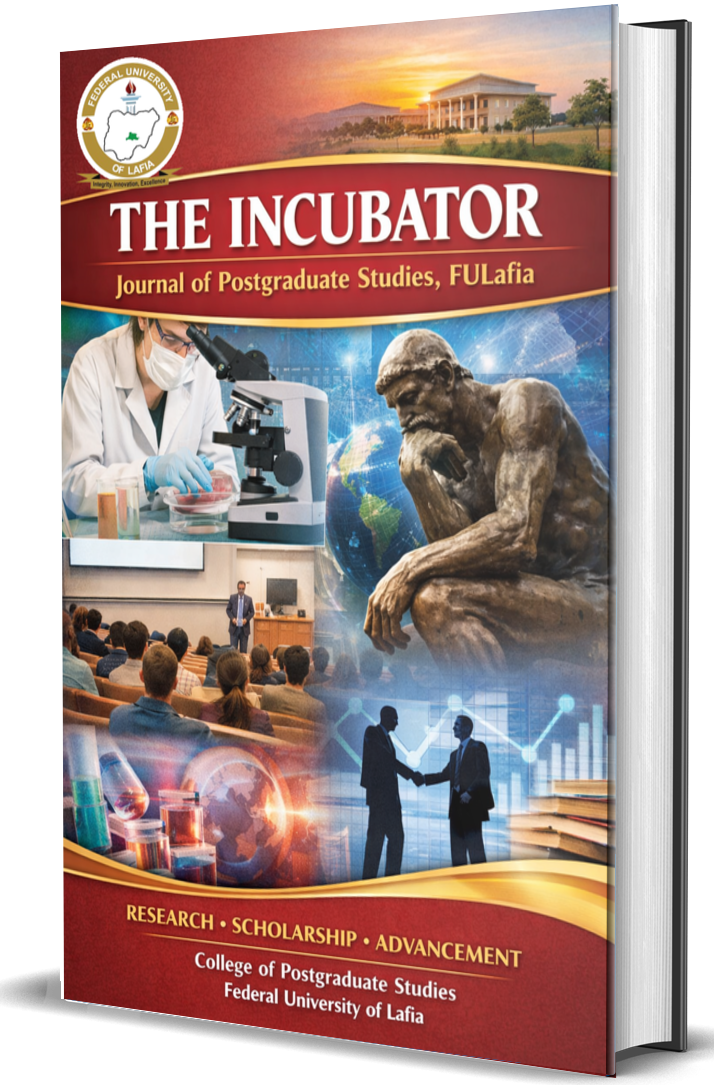
Volume 1, Issue 1, January-June 2026
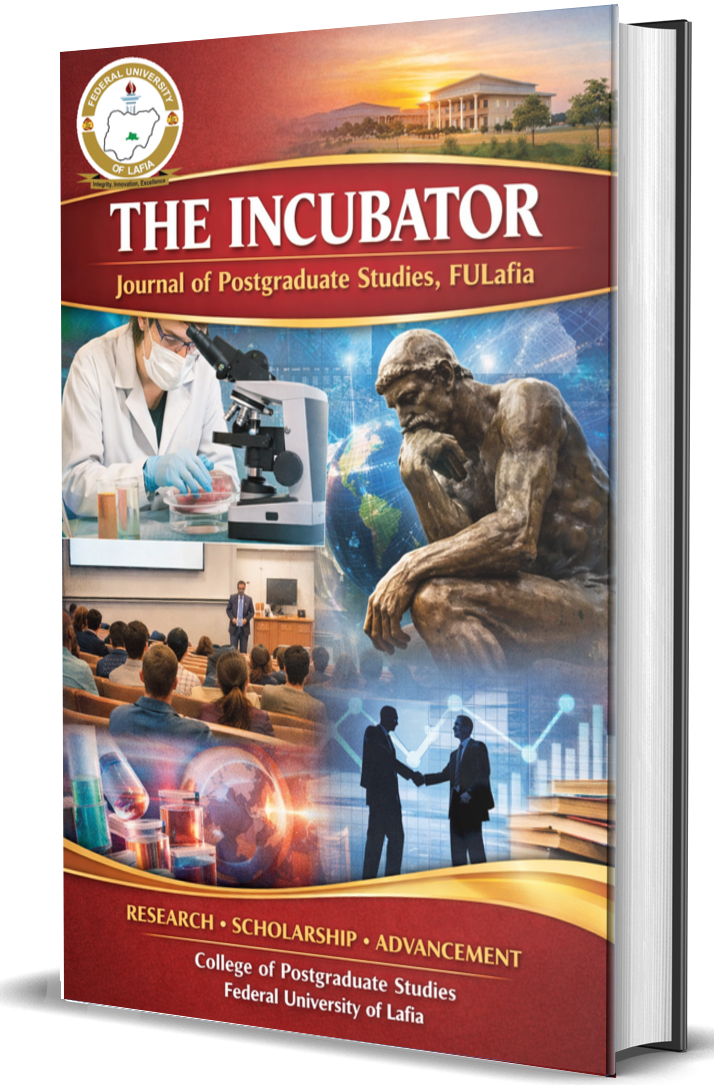
Advancing Scientific Inquiry through Interdisciplinary Research
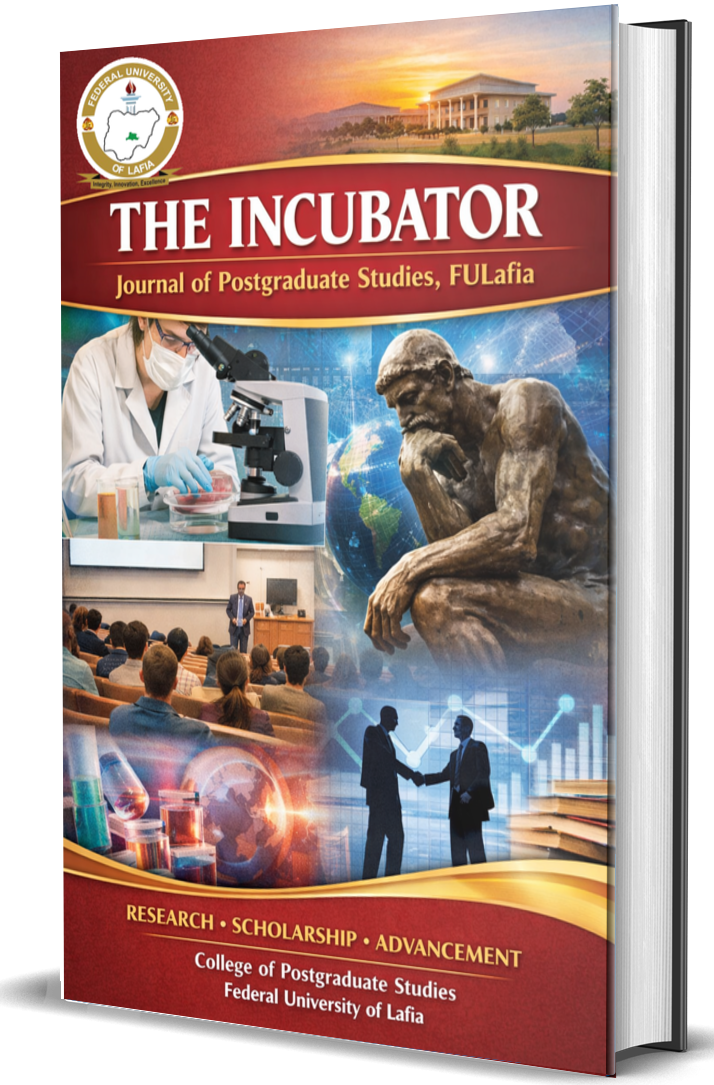
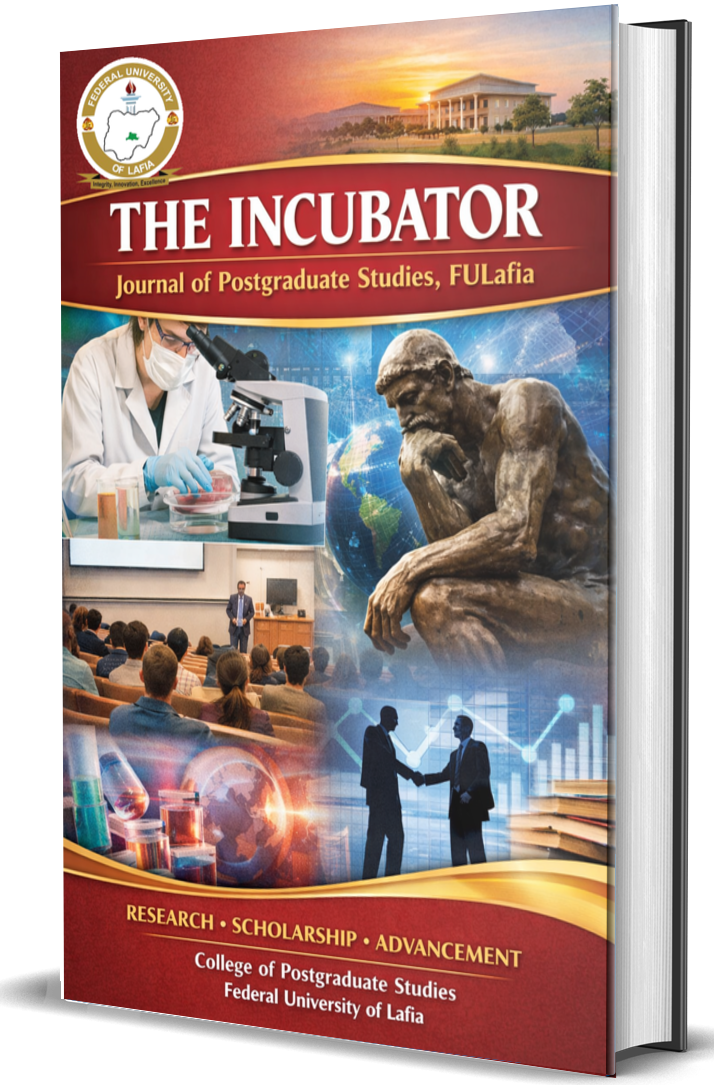
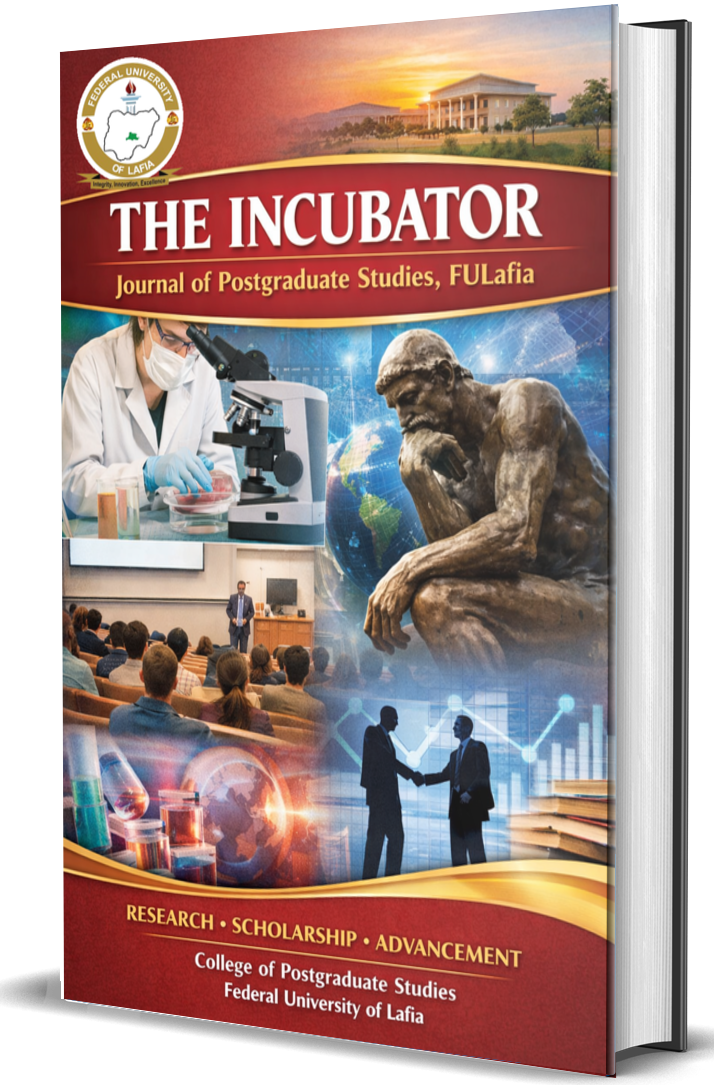
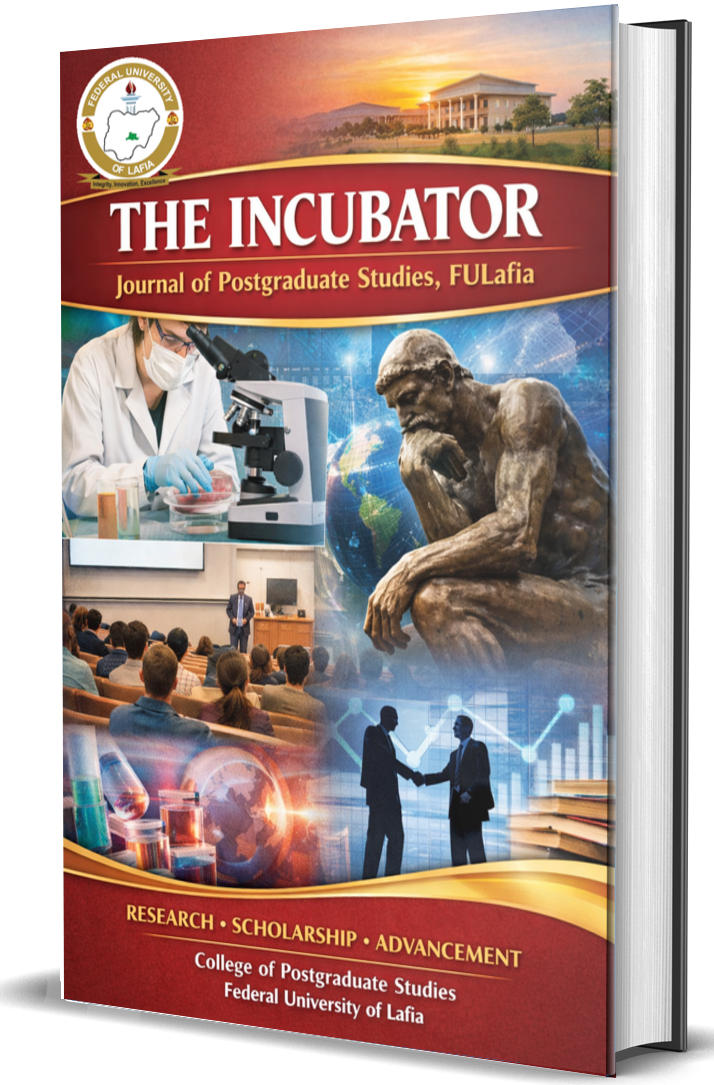
The publication of the inaugural issue of THE INCUBATOR: Journal of Postgraduate Studies, FULafia marks an important milestone in creating a scholarly platform for the dissemination of research, the exchange of ideas, and the advancement of postgraduate scholarship. Postgraduate education is the engine room of any serious university system. It is where new knowledge is produced, where the next generation of professors, researchers, policy makers and innovators is formed, and where universities prove their relevance to society. Research output at the postgraduate level therefore strategically lays out current concerns and the innovative ways that scholars and researchers are engaging them. As a journal dedicated to fostering academic inquiry and intellectual development, THE INCUBATOR seeks to provide opportunities for researchers to communicate their findings, engage with contemporary scientific challenges, and contribute to knowledge across disciplinary boundaries.
THE INCUBATOR will publish two different editions, alternating between STEM and the Humanities. This first issue brings together five contributions in the Science, Technology, Engineering and Mathematics (STEM) section, addressing questions in agricultural entomology, pesticide toxicology, medical microbiology, disease ecology, and radiation biophysics. While these investigations differ in their objectives and methodological approaches, they collectively demonstrate the importance of scientific research in understanding environmental processes, improving public health, and addressing challenges relevant to society.
The agricultural and environmental dimensions of this issue are reflected in two complementary studies. Echor and colleagues examine greenhouse environments in a tropical lowland area of Central Nigeria and their suitability for insect pest development. Their investigation draws attention to the relationship between environmental conditions and pest occurrence, an important consideration for sustainable agricultural production. In a related contribution, Dogara and colleagues evaluate the residual effects of pesticides on Drosophila melanogaster, addressing the biological implications of pesticide exposure. Together, these studies underscore the importance of understanding pest ecology and chemical control practices in agricultural and environmental management.
The intersection of microbiology and public health is represented by the work of Uyi and colleagues, who investigate the prevalence and virulence determinants of Proteus mirabilis among pregnant women attending selected primary healthcare centres in Nasarawa South, Nigeria. The study addresses an important area of maternal health research by examining bacterial occurrence and characteristics associated with pathogenicity. Investigations of this nature contribute to the evidence needed to strengthen infection surveillance and inform future clinical and microbiological research.
Environmental health receives further attention in the contribution by Kubiangha and colleagues, who assess freshwater snails and Schistosoma transmission in Doma Local Government Area of Nasarawa State. By focusing on organisms associated with the transmission ecology of schistosomiasis, the study highlights the relationship between aquatic environments and parasitic disease. It also illustrates the relevance of ecological monitoring to the understanding of infectious disease transmission in communities where environmental exposure remains an important public health concern.
The issue concludes its STEM contributions with a study by Orkaa and colleagues on low-dose X-ray-induced changes in rat skin dielectric properties and microstructure. Through the application of Cole–Cole analysis and scanning electron microscopy, the investigation brings together physical measurement and biological characterisation. This interdisciplinary approach illustrates how techniques developed within physics and materials science can be applied to the examination of biological systems and radiation-related phenomena.
Taken together, these five articles reflect the diversity of research questions that can be addressed through postgraduate scholarship. They also demonstrate the importance of combining experimental investigation, environmental observation, analytical methods, and interdisciplinary perspectives in the pursuit of scientific understanding. Particularly noteworthy is the attention given to research problems situated within Nigerian environments and communities. Such investigations contribute to locally relevant knowledge while creating opportunities for broader scientific comparison and collaboration.
The establishment of THE INCUBATOR: Journal of Postgraduate Studies, FULafia represents more than the introduction of another scholarly publication. It reflects a commitment to nurturing research capacity, encouraging scholarly communication, and strengthening the culture of academic investigation. Postgraduate research occupies a significant position in the development of new knowledge, providing opportunities for emerging scholars to refine their analytical abilities, question established assumptions, and contribute original perspectives to their respective disciplines.
As the journal develops, its continued relevance will depend on a sustained commitment to research integrity, methodological rigour, constructive peer review, and responsible scholarly publishing. These principles are essential not only for maintaining academic standards but also for ensuring that published research remains useful to researchers, practitioners, policymakers, and the wider society.
We express our appreciation to the contributing authors for their scholarly efforts, to the reviewers for their valuable assessments, and to the editorial and production teams for their dedication to bringing this inaugural issue to publication. Their collective commitment has provided an important foundation for the journal's future development.
It is with great pleasure that we present the first issue of THE INCUBATOR: Journal of Postgraduate Studies, FULafia. We look forward to the journal becoming a vibrant forum for postgraduate scholarship, interdisciplinary engagement, and the dissemination of research that advances knowledge and contributes to societal development.
Prof. Victor S. Dugga
Editor-in-Chief,
THE NCUBATOR: Journal of Postgraduate Studies, FULafia_
Volume 1, Issue 1 (2026)
Published:
2026-10-30